


Man's T-Shirt "Deus Ex Machina"





Choose size
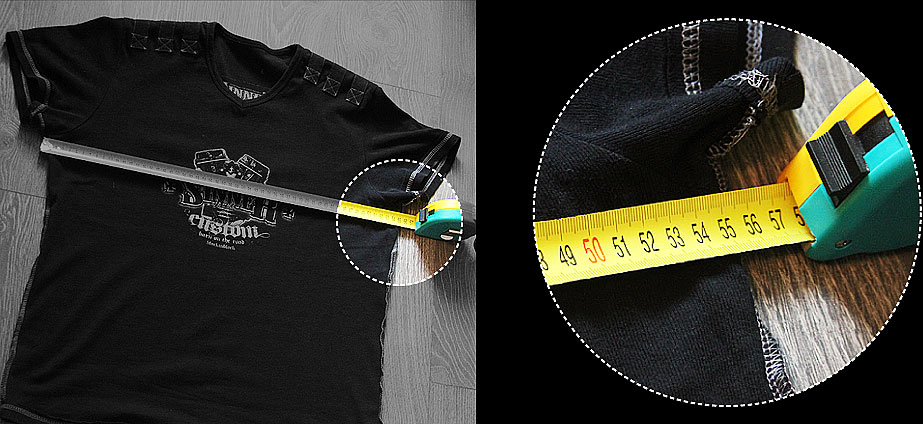
How to determine the size?

$61
$61
$61
$61
$61
$61
$61
$61
$61
Enter your contact mobile phone
manager will contact you to take your order
Submit Order
manager will contact you to take your order
Article number:
SB-TS2608
Цвет:
Хаки
The "Deus Ex Machina" (God from the Machine) men's T-shirt—featuring a garment-dyed finish and an artificial aging effect—stands as a symbol of industrial power, fatalism, and the inexorable passage of time. Centered on the chest is an incredibly detailed steampunk mechanism composed of interlocking gears and cogs, into which three human skulls are organically interwoven. This intricate, mesmerizing union of bone and metal embodies the soulless yet perfect mechanism of the universe.
On the back, the print continues this thematic narrative: beneath Gothic lettering, two guardian skulls rest upon metal components, creating the visual effect of a cohesive artistic engraving. Gold metallic accents—combined with the garment-dyed finish in vintage sandy-rust tones and artfully distressed textures—evoke the look and feel of aged metal, machine oil, and road dust. Raw, distressed edges at the neckline, sleeves, and hem—along with textured external seams—amplify the garment's rugged character, forging a powerful industrial-Gothic aesthetic. This T-shirt is designed for those who appreciate complex mechanical aesthetics and profound symbolism, and who choose clothing that reflects their inner strength and uncompromising spirit.
Material: 95% Cotton, 5% Lycra. The print application is of exceptional quality and is imperceptible to the touch. The T-shirt has been garment-dyed at 90°C and will not shrink after washing. Attention: Features a metallic finish! We recommend washing the garment inside out at a temperature no higher than 30°C, for no longer than 90 minutes, and separately from coarse fabrics; use the delicate cycle on your washing machine. Ironing is permissible.
On the back, the print continues this thematic narrative: beneath Gothic lettering, two guardian skulls rest upon metal components, creating the visual effect of a cohesive artistic engraving. Gold metallic accents—combined with the garment-dyed finish in vintage sandy-rust tones and artfully distressed textures—evoke the look and feel of aged metal, machine oil, and road dust. Raw, distressed edges at the neckline, sleeves, and hem—along with textured external seams—amplify the garment's rugged character, forging a powerful industrial-Gothic aesthetic. This T-shirt is designed for those who appreciate complex mechanical aesthetics and profound symbolism, and who choose clothing that reflects their inner strength and uncompromising spirit.
Material: 95% Cotton, 5% Lycra. The print application is of exceptional quality and is imperceptible to the touch. The T-shirt has been garment-dyed at 90°C and will not shrink after washing. Attention: Features a metallic finish! We recommend washing the garment inside out at a temperature no higher than 30°C, for no longer than 90 minutes, and separately from coarse fabrics; use the delicate cycle on your washing machine. Ironing is permissible.
Description:
*Deus ex machina* (Latin for "god from the machine") is a literary and theatrical device in which an unexpected, external intervention suddenly resolves a seemingly unsolvable situation or rescues characters from a difficult predicament.
The term originated in ancient Greek theater, where divine characters were literally lowered onto the stage using special mechanical cranes so that a god could "resolve" the plot's central conflict and aid the characters. Today, the concept is used to describe any sudden—and often illogical—plot twist in a book, film, or play that appears to be random assistance "from above," allowing for a quick resolution to a complex narrative.
What does this look like in practice?
For instance, imagine the most tense scene of a story: help suddenly arrives for the protagonists from a character who has never been mentioned before, or the situation is magically resolved thanks to a previously unknown force.
Why is *deus ex machina* used?
This device can heighten the drama or make a finale truly memorable; however, it is often viewed as a "lazy way out" of a narrative dead end. Consequently, it is employed with caution, as it proves effective only when it aligns seamlessly with the overall style and tone of the work.
*Deus ex machina* acts as an unexpected "intervener" in a story's conclusion, helping the protagonists escape a critical situation; yet, it is more often perceived as a dramatic—albeit controversial—maneuver for bringing a plot to a close.
The term originated in ancient Greek theater, where divine characters were literally lowered onto the stage using special mechanical cranes so that a god could "resolve" the plot's central conflict and aid the characters. Today, the concept is used to describe any sudden—and often illogical—plot twist in a book, film, or play that appears to be random assistance "from above," allowing for a quick resolution to a complex narrative.
What does this look like in practice?
For instance, imagine the most tense scene of a story: help suddenly arrives for the protagonists from a character who has never been mentioned before, or the situation is magically resolved thanks to a previously unknown force.
Why is *deus ex machina* used?
This device can heighten the drama or make a finale truly memorable; however, it is often viewed as a "lazy way out" of a narrative dead end. Consequently, it is employed with caution, as it proves effective only when it aligns seamlessly with the overall style and tone of the work.
*Deus ex machina* acts as an unexpected "intervener" in a story's conclusion, helping the protagonists escape a critical situation; yet, it is more often perceived as a dramatic—albeit controversial—maneuver for bringing a plot to a close.




















Opinions (0)